How Robots in Restaurants Improve Efficiency and Customer Experience
Speed, consistency, and customer experience are crucial in today’s restaurant environments. However, teams are facing immense pressure from busy periods, long hours, and routine tasks, a challenge amplified by an ongoing labor shortage in Malaysia’s F&B sector.
As a result, more operators are turning to robots in restaurants to improve daily operations. These robots do not replace human service but help with routine tasks such as food delivery, dish returns, guest guidance, and promotional displays.
Restaurant robots reduce back-and-forth and speed up service. While human staff can focus on order accuracy, table-side attention, and customer interactions.
For Malaysian restaurants, robots are more than a novelty. They improve workflow, maintain service quality during busy hours, and enhance the guest experience.
This guide explores how restaurant robots support both operational efficiency and customer satisfaction, and how Tekmark’s Robotics solutions help restaurants modernize with confidence.
Key Takeaways:
- Improves operational efficiency: Handles routine tasks such as food delivery, dish return, and repeated kitchen-to-floor trips.
- Supports smoother service: Helps restaurants maintain a more consistent pace during peak dining periods while easing pressure on staff.
- Improves staff and guest experience: Gives staff more time for hospitality and order accuracy, while adding interactive greetings and promotional displays.
- Fast to deploy, easy to start: Rental options available, with units live in around 48 hours, faster than hiring or approvals.
- Deployment support and compliance: Tekmark brings 32 years of engineering experience, with SIRIM and ISO 9001:2015 compliance.
What Restaurant Robots Actually Do on the Floor
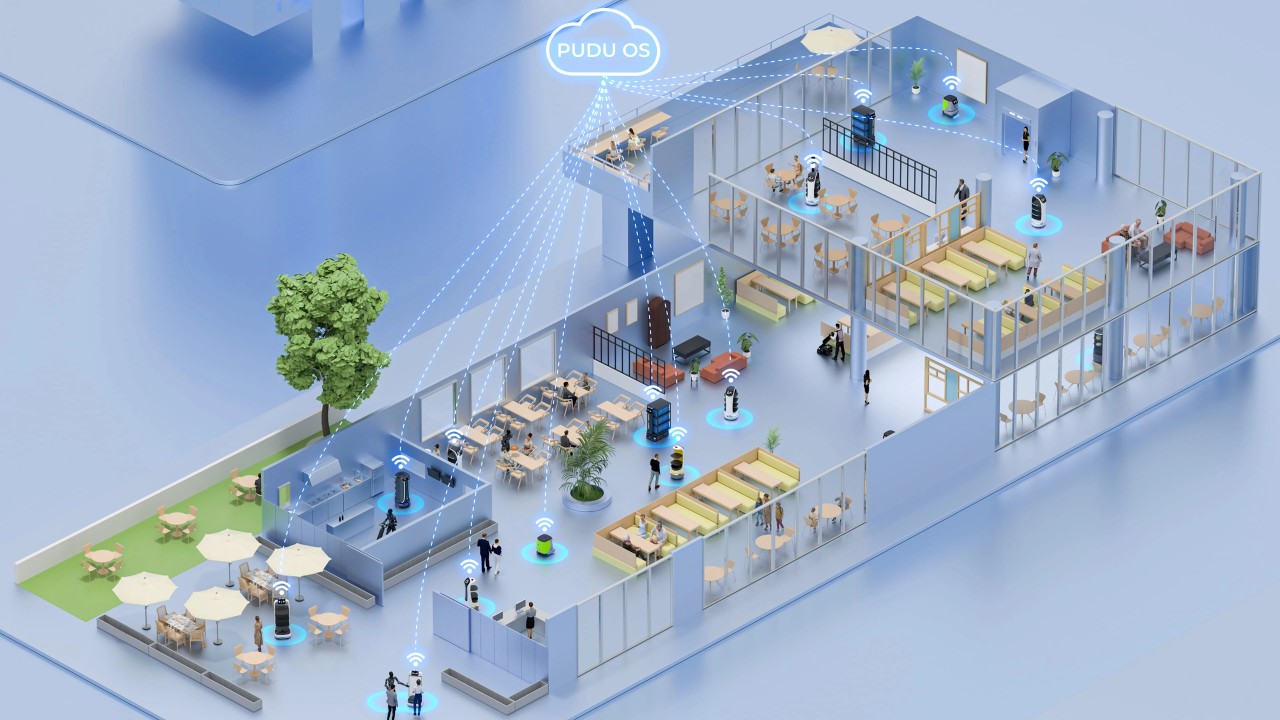
Restaurant robots support a range of front-of-house tasks, helping restaurants run more efficiently. On the floor, they are commonly used for food delivery, dish return, guest guidance, and promotional display.
When assigned to these repeatable tasks, commercial robots help streamline service flow and support staff during busy periods.
Delivered through iFACT, Tekmark’s dedicated industrial automation subsidiary, these intelligent solutions allow restaurant teams to spend less time on routine transport and more time on hospitality, order accuracy, and customer care.
Food Delivery and Dish Return
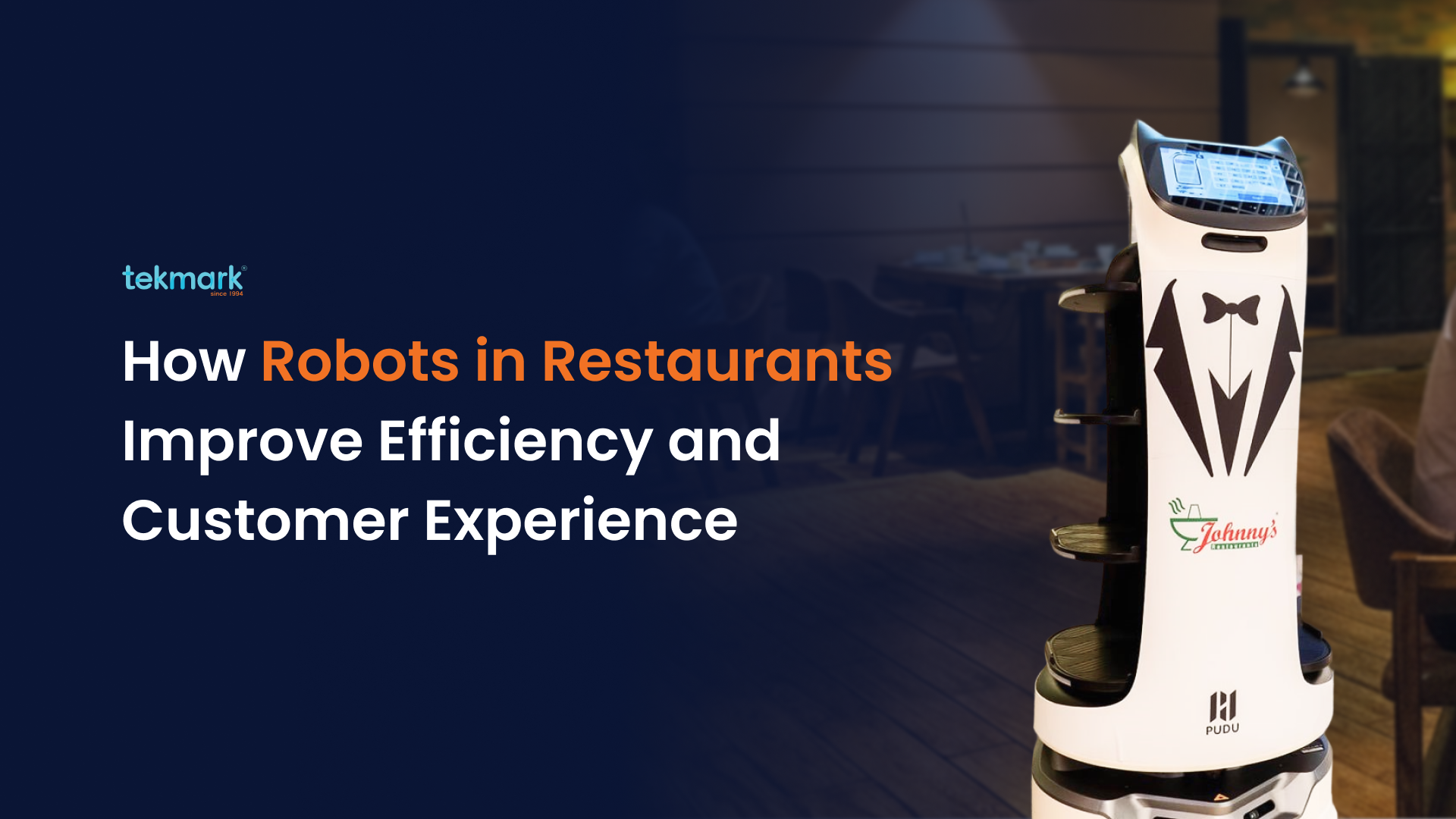
One of the most practical uses of robots in restaurants is moving food from the kitchen to the dining floor. During busy service periods, delivery robots like the PuduBot 2 can carry multiple dishes on a single trip and deliver them to the correct table zone, helping reduce delays between preparation and service.
Robots can also support dish return by collecting used plates and sending them back to the clearing area or kitchen. This helps speed up table turnover, reduces unnecessary walking, and eases some of the physical strain on floor staff.
Guest Interaction and Promotional Support
Some restaurant robots offer more than delivery support. Commercial robots like the KettyBot Pro combine delivery with table guidance, voice interaction, and an integrated display for promotions or menu highlights.
This adds a useful front-of-house touchpoint that supports both service and marketing. It also gives restaurants a more modern and engaging way to communicate with diners throughout the customer journey.
Better Workflow for Floor Staff
Robots are most effective when integrated into the restaurant’s service flow. Automations like the BellaBot support high-volume food delivery by handling repetitive kitchen-to-table transport, helping teams divide work more efficiently across the floor.
This allows staff to spend more time on guest-facing responsibilities such as checking order accuracy, responding to requests, recommending menu items, and managing the overall dining experience.
In this way, robots support the operational side of service while human staff remain focused on hospitality.
How Robots Navigate the Realities of Malaysian Dining Spaces
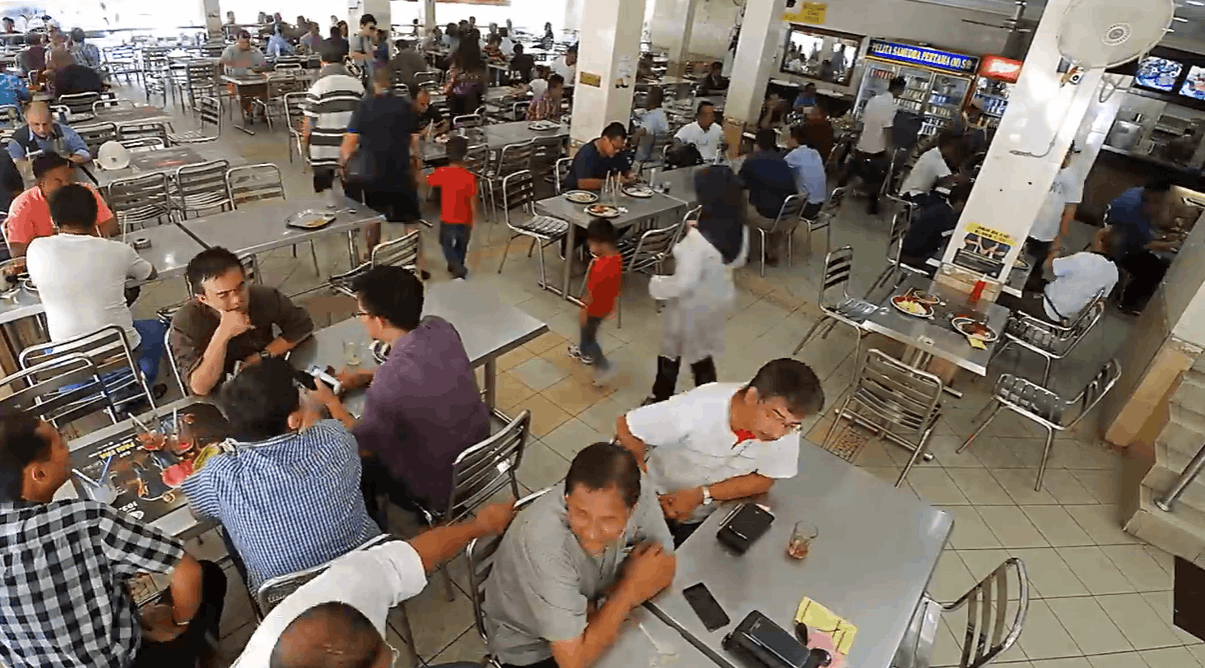
A common concern among restaurant operators is whether commercial service robots can actually work in real Malaysian dining environments. Many outlets are not designed with automation in mind. Narrow walkways, closely spaced tables, moveable chairs, uneven floor layouts, and heavy foot traffic are all part of daily service in many restaurants, cafés, kopitiams, and mall-based outlets.
That is why successful deployment depends on more than just the robot itself. The right robotic solution must fit the restaurant’s layout, service flow, and operating needs, while still moving safely and reliably during busy periods.
Designed for tight, busy restaurant layouts
One reason restaurants use robots is that they can support service without requiring a complete redesign of the floor. In many cases, service robots can operate within existing dining layouts as long as pathways are clear enough for safe movement.
This makes them practical for restaurants that want to improve delivery flow and reduce repeated staff walking, but do not want to commit to major renovation work.
For outlets with tighter spaces, a proper layout check before deployment helps ensure the robot can move smoothly between the kitchen, service zones, and dining tables.
Built for safer movement in high-traffic environments
Restaurant service is dynamic. Staff cross paths, customers move unpredictably, chairs are shifted, and peak-hour traffic can change quickly from one moment to the next. In this kind of environment, safety and responsiveness are essential.
Robots designed for restaurant use can detect obstacles and adjust their movement in real time, helping them operate more safely in crowded spaces.
This gives operators more confidence that the robot can continue supporting service without disrupting the dining floor or creating unnecessary risk during busy periods.
Supports more reliable service throughout the day
For many restaurants, the value of a robot is not just whether it can move from point A to point B. It is whether it can do so consistently during lunch rushes, dinner peaks, and long operating hours.
When a robot is matched to the restaurant’s workflow and floor layout, it can help ensure smoother service throughout the day by handling repetitive transport tasks in a steady, predictable manner.
This supports service continuity, reduces pressure on staff during busy periods, and helps restaurants deliver a more consistent customer experience even when the floor is full.
Why Restaurant Robots Are Becoming a Practical Business Tool in Malaysia
Restaurant robots are gaining traction in Malaysia because they help operators improve service standards without complicating day-to-day operations.
For many restaurants, the decision is less about novelty and more about finding practical ways to keep service efficient, ease staff pressure, and create a better overall dining experience.
Rather than changing the core of hospitality, robots help restaurants strengthen the operational side of service. This makes them an increasingly useful option for operators looking to improve consistency, support their teams more effectively, and modernize at a manageable pace.
The Structural Advantage: Beating the Labor Quotas
The ongoing F&B labor shortage represents a lasting change in the industry, not just a short-term challenge. The 13th Malaysia Plan (2026–2030)* mandates reducing the share of foreign labor in the country to 10% by 2030 and just 5% by 2035.
For outlets struggling with unfilled positions, continuing to rely solely on traditional hiring methods presents a massive compliance and operational risk.
Robots fill this critical gap because they operate entirely outside the foreign worker quota system. There are no permit applications, levy hikes, or sudden immigration policy changes to navigate.
They offer the only “hiring channel” with absolute operational certainty, unaffected by national caps.
The Value of Operational Certainty
When comparing the realities of expanding your floor team versus deploying a service robot to assist them, the structural advantages become clear:
Comparison Table between Traditional Service Staff and Service Robots
| Metric | Traditional Staff | Robotic Support |
|---|---|---|
| Availability & Scaling | Subject to 10% national cap (13MP)* | Unlimited; operates outside labor quotas and levies |
| Deployment Time | High: requires 1 to 2 weeks of training with a constant risk of turnover | Instant: map the floor once and the unit is ready to support service |
| Shift Capability | 8 to 10 hours; subject to fatigue which can slow peak-hour service | 24 readiness; handles repetitive tasks without overtime costs or fatigue |
| Reliability | Subject to MCs, leave, and sudden resignation | 99.9% uptime; consistent performance |
Faster service during peak periods
Busy lunch and dinner hours can place pressure on both the kitchen and the dining floor. When staff are constantly moving food, clearing dishes, and responding to customer needs simultaneously, service can slow down.
Delivery robots help reduce these bottlenecks by taking over repeated delivery and return trips. This keeps food moving more steadily from kitchen to table and helps restaurants maintain a more consistent pace of service during high-traffic periods.
Lower repetitive workload for staff
Restaurant work often involves constant walking, carrying, and back-and-forth movement across the same routes. Over time, these repetitive tasks can reduce efficiency and pull staff away from higher-value service responsibilities.
By handling routine transport tasks, robots help reduce physical strain and free up staff to focus on guest-facing work. This includes checking order accuracy, responding to requests more quickly, and giving more attention to the overall dining experience.
Better customer experience on the floor
For many operators, the value of a robot is not only operational. It can also shape how customers experience the restaurant. Smoother service, faster delivery, interactive greetings, and visible promotional displays all contribute to a more engaging dining journey.
When used well, robots add a modern touch without replacing human hospitality. They support the service experience while allowing staff to focus on the personal interactions that customers still value most.
Read the article on Autonomous Mobile Robots Explained: Why More Industries Are Turning to AMRs to understand how this technology works behind the scenes.
How Malaysian Restaurants Are Using Robots
The case for robots is not theoretical; it is already playing out across Malaysia’s F&B landscape. The following case studies show what robot deployment looks like in practice:
Black Canyon: Improving Service Flow Across 25 Outlets
Black Canyon, a prominent Thai-fusion chain in Malaysia, shows how robots can support both operational efficiency and customer experience at scale.
Across its nationwide outlets, the brand introduced service robots such as the BellaBot to reduce repetitive transport tasks and enable staff to focus more on front-of-house service.
- Operational impact: Each robot carries multiple dishes per trip, improving kitchen-to-table efficiency and reducing repeated walking during busy periods.
- Customer experience: Outlet feedback shows the robots attract attention from diners, especially families and children, making the dining experience more engaging.
- Service outcome: By handling routine food transport, the robots free up staff to focus more on order accuracy, guest interaction, and table-side service.
Food Bayana, Penang: Supporting Scalable Delivery in a Complex Dining Environment
Food Bayana in Bayan Lepas shows how robots can also support more complex restaurant and food-service formats.
As a large automated food hub with multiple vendors and a multi-level layout, the hub uses Tekmark’s FlashBots to manage delivery across a more demanding operating environment.
- Streamlined cross-floor delivery: Robots move meals efficiently across Food Bayana’s two-storey, 31-vendor layout, reducing delivery bottlenecks.
- Clearer workflow: By separating food preparation from food transport, vendors can stay focused on cooking while the robot fleet handles delivery more consistently.
- Scalable for complex spaces: The setup shows how robots can support larger multi-vendor dining environments, not just single restaurants.
Rental or Purchase: What Works for Your Restaurant
Rental is the easier way to start
Rental is a lower-risk entry point with no major upfront capital outlay, and units can typically be mapped and live in around 48 hours.
This makes it a practical option for first-time deployments, short-term operational support, or restaurants that want to test how a robot fits into their floor layout and service workflow before making a bigger commitment.
Purchase makes more sense for long-term scaling
For multi-outlet operators or restaurants planning to standardize operations over the next few years, purchasing can offer stronger long-term value. It also gives more room for deeper integration, interface customization, and rollout consistency across locations.
Not sure which option best suits your restaurant? Tekmark can help you evaluate both automated solutions based on your outlet size, layout, and operational goals.
Why Tekmark Is Not Just Another Robotics Solutions Provider
As Malaysia’s service robotics market continues to grow, many providers offer off-the-shelf solutions with limited long-term support. Choosing the right robotics solutions provider is therefore critical—one that offers strong integration capabilities and reliable after-sales technical support will ensure long-term performance and operational continuity.
At Tekmark, we go beyond offering robotics. With a strong R&D team, we bring the technical expertise and operational understanding required to make robotics adoption practical, scalable, and sustainable. Through our subsidiary iFACT, a leading Regional Partner of Pudu Robotics, we deliver deployment-ready solutions.
Regional Presence with Localized Support
Tekmark operates across ASEAN with direct offices in Malaysia, Singapore, and the Philippines, enabling us to provide responsive local technical support and reliable after-sales service.
This regional footprint ensures that customers are not left relying on remote assistance but are supported by on-ground teams who understand local operational environments. Whether you operate a single outlet or multiple locations across the region, you can count on consistent, timely support to keep your operations running smoothly.
Engineering Expertise & Custom Integration
Beyond distribution, Tekmark is backed by a strong in-house R&D and engineering team capable of delivering application-specific integration solutions.
We understand that no two restaurant environments are the same. From workflow optimization to system integration, our team ensures that PUDU robots are tailored to fit seamlessly into your operations—maximizing efficiency while minimizing disruption.
Flexible Financing for Easier Adoption
We recognize that adopting new technology is a strategic investment. That’s why Tekmark offers flexible financing options, including Robots-as-a-Service (RaaS), allowing businesses to deploy robotics solutions without heavy upfront costs.
This lowers the barrier to entry and enables operators to scale at their own pace while aligning investment with business growth.
Deployment Support That Goes Beyond Delivery
A robot should enhance operations—not become an obstacle. Tekmark ensures smooth implementation through layout assessments, deployment planning, and on-site setup tailored to each restaurant’s service flow.
Whether starting with a pilot deployment or scaling across multiple outlets, we help ensure a seamless transition into robotic-assisted operations.
Safety and Compliance as Standard
Successful deployment is not just about functionality—it must also meet real-world safety and operational requirements.
Tekmark operates with an ISO 9001:2015 certified quality management system, ensuring consistent service standards, structured processes, and operational excellence across every deployment.
From Operational Pressure to Better Service with Tekmark
For restaurants looking to modernize without adding operational complexity, Tekmark offers a practical and scalable path forward. Backed by iFACT – Tekmark’s dedicated automation and robotics subsidiary and a leading Regional Partner of Pudu Robotics—customers benefit from strong regional support, technical expertise, and end-to-end deployment capability.
Explore our Commercial Delivery Robots and see how Tekmark’s automation solutions can help improve efficiency and elevate the customer experience in your restaurant.
FAQs
Robot waiters are automated, mobile machines that deliver food and clear dishes, using sensors to navigate independently.
Also known as Intelligent Service Robots (ISRs), they help address staffing shortages, boost efficiency, and offer a novel, cost-effective solution for restaurants.
The cost depends on the robot model, deployment scope, and support package. Some restaurants choose rental as an easier way to start, while others purchase for longer-term use and standardization across outlets.
The best way to get an accurate cost estimate is to request a quote based on your outlet layout, service needs, and rollout plan.
AI helps restaurant robots operate more effectively in busy dining spaces. AI robotics supports navigation, route planning, obstacle detection, and smooth movement around staff, guests, and furniture.
AI robots can also support front-of-house functions such as interactive greetings, guiding guests, and displaying promotions or menu highlights.
In most cases, no. As long as your main service aisles meet the minimum clearance standard, no structural changes are required.
A pre-deployment layout audit will identify any adjustments needed, usually minor rearrangements of furniture or pickup zones rather than renovation work.
Related Articles