AMR vs AGV: Which Autonomous Robot Fits Your Warehouse Needs?

Malaysia’s industrial growth has highlighted the need for faster, more predictable internal logistics. As throughput rises, manual material transport creates delays, inconsistent cycle times, and higher operational risk—especially in facilities with shared forklift and pedestrian traffic.
Automated mobile robots, including Automated Guided Vehicles (AGVs) and Autonomous Mobile Robots (AMRs), improve consistency by moving materials between staging, storage, pick-and-pack, and production zones with predictable performance.
This guide helps warehouse, operations, and engineering teams choose between AMR vs AGV based on how each performs when layouts change, aisles are blocked, or demand spikes.
Key Takeaways:
- Choose AMRs when layouts change frequently, aisles are shared, or routes must adapt in real time
- Choose AGVs when transport routes are stable, repeatable, and can run in structured lanes
- Evaluate systems based on layout volatility, traffic complexity, scalability, and total cost of change
- The best system is the one that maintains material flow when conditions shift—not just under ideal assumptions
AMR vs AGV at a Glance
AGVs and AMRs represent two distinct approaches to warehouse automation, each designed for different operational conditions.
What is an AMR?
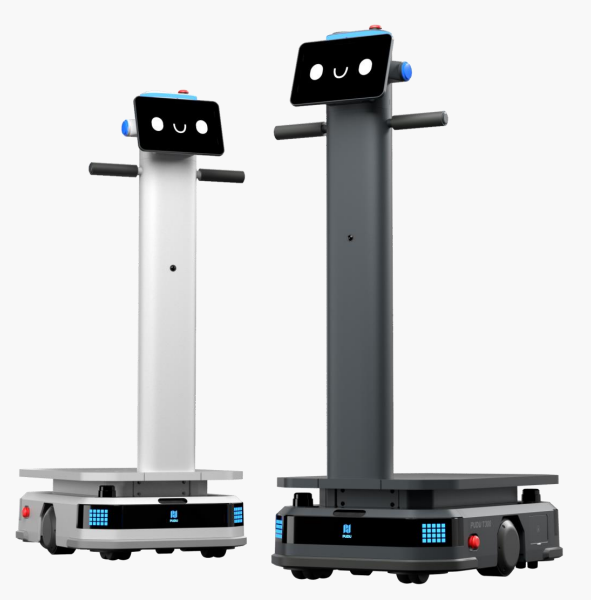
An Autonomous Mobile Robot (AMR) navigates using onboard sensors and real-time mapping to move dynamically through facilities. Unlike fixed-route systems, AMRs adjust their path when aisles are blocked and find alternative routes to complete missions.
This path flexibility enables AMRs to reconfigure more quickly when zones shift, layouts evolve, or new delivery points are added. AMRs suit warehouses with frequent re-slotting, mixed traffic, or changing workflows.
What is an AGV?
An Automated Guided Vehicle (AGV) is a mobile transport system that follows predefined routes using physical guides (such as tape or wires) or virtual guidance. Routes are planned in advance, making AGVs optimized for repeatable point-to-point movement—shuttling pallets or carts between fixed stations.
AGVs deliver consistent performance in structured, predictable environments with minimal obstacles and clear traffic rules. When operations change, updates involve route planning, validation, and coordination, particularly if lanes, crossings, or shared areas need redesign to maintain flow.
Want a deeper understanding of AMR technology and adoption trends? Read Autonomous Mobile Robots Explained: Why More Industries Are Turning to AMRs to learn how AMRs work and why more businesses are adopting them.
Key Differences between AMR and AGV
Below is a comparison of AMR vs AGV based on navigation, adaptability, and operational impact in real warehouses:
| Difference | AMR | AGV |
| Navigation method | Onboard sensors and real-time mapping | Predefined routes (physical/virtual guides) |
| Route adjustment | Software updates with minimal disruption | Requires reprogramming and validation |
| Obstacle response | Detects and reroutes dynamically | Stops and waits for clearance |
| Traffic compatibility | Handles shared aisles effectively | Best with dedicated lanes |
| Modification complexity | Faster reconfiguration via software | Planning, testing, and coordination needed |
| Infrastructure changes | Primarily software-based updates | May require physical adjustments |
| Fleet scaling | Simpler deployment and rebalancing | Route capacity analysis required |
| Expansion planning | Add units with software configuration | System-wide traffic validation needed |
| Ideal workflow | Multi-zone delivery with frequent changes | High-repeatability, fixed point-to-point |
| Best environment | Dynamic layouts, mixed traffic | Structured, stable, controlled traffic |
-
Navigation and Route Flexibility
AMRs navigate using onboard sensors, such as LiDAR, cameras, and ultrasonic sensors, along with real-time mapping.
Rather than following fixed paths, they calculate routes dynamically and reroute when aisles are blocked or layouts change.
AGVs follow predefined routes using physical guides (such as magnetic tape or wires) or virtual guidance.
Routes are engineered and validated before go-live, making AGVs highly reliable for stable, repeatable point-to-point transport.
Operational Impact
AGV route changes usually require reprogramming and validation to ensure compliance with traffic rules.
AMRs handle many changes through software updates and mission reconfiguration, reducing downtime in warehouses that frequently re-slot inventory or adjust workflows.
The PUDU T300 uses VSLAM + LiDAR SLAM navigation, enabling it to adapt maps quickly when layouts change — a practical example of dynamic routing without physical guides
-
Obstacle Handling in Real Operations
AMRs continuously scan their surroundings and detect obstacles in real time. If an aisle is blocked, the robot can look for a safe alternate route and detour around the obstruction. If no safe path is available, it will wait, but it is designed to keep moving whenever conditions allow rather than relying on a single fixed path.
When an AGV encounters an obstacle in its route, it usually stops and waits until the path is clear. Many systems follow strict traffic rules, such as yielding at intersections or waiting for scheduled crossing windows. The AGV resumes only when the route is clear and safe, as per its programmed rules.
Operational Impact
In mixed-traffic warehouses, obstacle handling affects throughput and congestion. AGVs work best with tightly controlled traffic and dedicated lanes.
AMRs suit shared aisles where separation is limited and congestion changes throughout the day, reducing the need for automation-only lanes.
To operate safely in these environments, industrial AMRs use certified safety systems. For example, the PUDU T300 is ISO 3691-4 compliant and uses LiDAR, depth sensors, and emergency stops around forklifts and pedestrians.
-
Change Management (Cost of Change)
Total cost of change includes engineering time, system validation, downtime, traffic reconfiguration, retraining, and lost throughput during transitions.
AMRs are designed for flexibility. Adding destinations or adjusting workflows is done via fleet management software, with minimal fixed infrastructure needed.
Staging zones and delivery points can be changed through software, and tasks can be reassigned during peak periods without redesigning the traffic plan.
For AGVs, updating their routes or expanding coverage requires careful planning and validation. Physical guidance may need downtime for tape or wire adjustments.
Even with virtual guidance, route changes still require mapping, traffic rule updates, obstacle checks, and test runs. Adding new pickup or drop-off points often means reviewing overall traffic flow to avoid bottlenecks.
Operational Impact
Over a 5 to 7 year period, most warehouses experience layout changes, SKU growth, and seasonal reconfiguration. AGVs deliver strong value when change is infrequent and predictable.AMRs tend to deliver better long-term value when workflows evolve regularly or growth is uncertain.
-
Scalability for Growth and Peak Seasons
AMR fleets scale easily since robots aren’t limited to fixed lanes. Adding units for peak periods usually involves deploying more robots and updating the fleet management system.
Capacity can be quickly shifted by reassigning robots to high-demand areas through software, making AMRs ideal for seasonal spikes, promotions, and changing order profiles.
Adding vehicles to an AGV fleet requires checking route capacity and traffic rules. Since AGVs follow fixed paths, you must ensure that lanes and intersections can accommodate additional units without congestion or safety conflicts.
Scaling up may involve traffic simulations, timing adjustments, or expanding dedicated lanes, especially during seasonal peaks.
Operational impact
The key question during peak periods is how fast capacity can be added without disrupting flow. AGVs work well when peak demand is known and planned in advance.
AMRs provide more responsive scaling when demand fluctuates or when temporary capacity is needed without permanent infrastructure changes.
With up to 12 hours of runtime and fast recharging or battery swap support, AMRs like the T300 are suited for around-the-clock operations without frequent downtime.
Best Environments for Deploying AMRs
Autonomous Mobile Robots(AMRs) excel when flexibility, adaptability, and mixed traffic are standard conditions. AMRs deliver the strongest ROI in warehouses with frequent changes or operations without strict traffic separation.
Ideal AMR applications:
- Multi-zone replenishment: Variable pick-face restocking where SKU locations shift based on velocity or seasonal demand. AMRs adapt without route reprogramming.
- Goods-to-person support: Feeding pick stations and packing areas where task priorities change hourly based on order profiles.
- Cross-facility delivery: Moving materials between receiving, storage, picking, packing, and staging when zones aren’t separated by dedicated automation lanes.
- Kitting and line-side delivery: Supporting production where part requirements vary by schedule and delivery points change based on active lines.
- Mixed-traffic environments: Facilities where forklifts, pickers, and pedestrians share aisles with automation.
AMR Suitability
Choose AMRs when you re-slot inventory monthly or seasonally, cannot dedicate automation-only lanes, face unpredictable peak patterns, or plan facility expansions within two years.
Robots like the PUDU T300 demonstrate how modern AMRs handle the mixed-traffic conditions common in Malaysian warehouses.
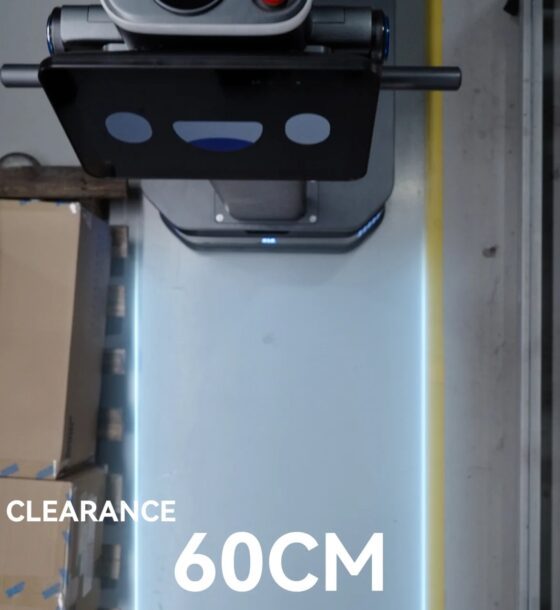
It carries up to 300 kg, runs up to 12 hours (no load) or 6 hours (full load), recharges in approximately 2 hours, and can operate in aisles as narrow as 60 cm.
With obstacle detection and a compact footprint, it suits space-constrained Fast-Moving Consumer Goods (FMCG) and Third-Party Logistics (3PL) facilities.
Common Industrial Delivery Workflows
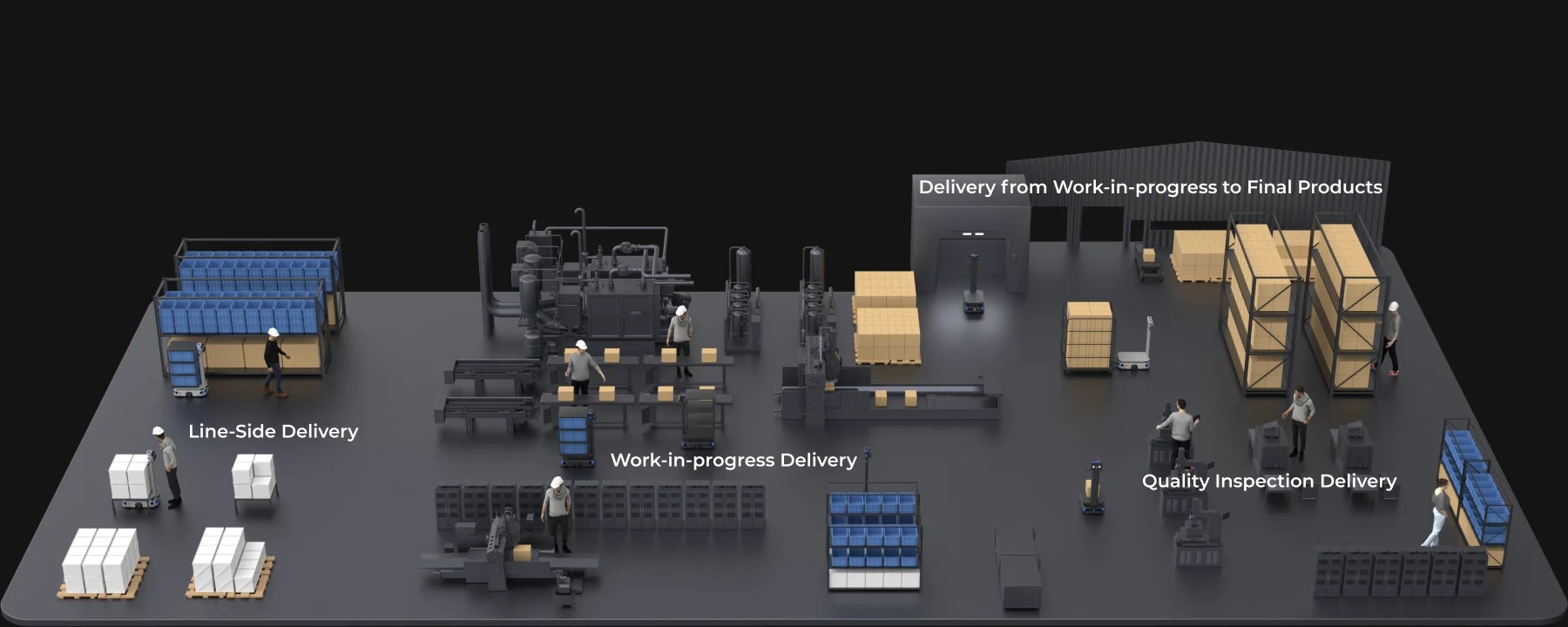
Most facilities share similar material flows. Autonomous Mobile Robots (AMRs) are particularly effective in workflows where routes, priorities, or storage locations change frequently.
The table below highlights common delivery workflows where AMRs improve flexibility and operational efficiency:
| Workflow | How AMRs Support the Workflow |
| Inbound staging to storage | Managing flexible buffer zones and variable SKU placement during receiving |
| Storage to pick or pack zones | Supporting dynamic slotting, seasonal changes, and goods-to-person operations |
| Pick or pack to dispatch staging | Prioritising orders based on carrier schedules or order types |
| Line-side replenishment | Delivering components for mixed-model production with changing part requirements |
| WIP transfer between cells | Moving work-in-progress between production cells with variable routing |
Implementation Guide: Deploying AMRs or AGVs in Your Warehouse
Successful automation deployment starts with thorough preparation and a structured rollout. With the right data and clear parameters in place, the initial setup and pilot can often be completed within a day, allowing teams to quickly validate results before scaling further.
Site Assessment: What to Gather First
Focus your site assessment on three areas:
- Facility constraints: aisle widths, floor transitions, and overhead clearances
- Load specifications: payload weights and container types
- Traffic patterns: where forklifts, pedestrians, and automation intersect
This information shows which system fits your real operating conditions, not ideal scenarios.
Pilot Selection: Start Small, Prove Value
Successful deployments start with focused pilots before scaling.
- Choose strategic pilot routes: Select 1 to 2 high-frequency loops with clear pain points such as delays, congestion, or safety issues. Start with simple point-to-point movements.
- Establish baselines: Record cycle times, delivery accuracy, congestion, and labor hours to measure improvement and ROI.
- Plan for speed: AMRs usually deploy faster because they rely on software configuration rather than physical route installation.
KPIs to Measure: Beyond Labor Savings
Labor savings matter, but long-term value comes from operational performance. Track the following:
- Cycle time per run: Measure pickup-to-delivery duration and consistency, not just average speed.
- On-time internal deliveries: Confirm materials arrive within expected windows to avoid idle time or stoppages.
- Congestion and blocked-aisle events: Record traffic conflicts and obstructions. AMRs often reduce impact through dynamic rerouting.
- Exceptions and manual interventions: Count human resets or manual deliveries. High rates signal poor workflow fit.
- Stockout incidents: For line-side replenishment, track shortages resulting from delivery failures.
Scale Triggers: When to Expand
Use objective triggers rather than assumptions to guide expansion decisions.
- Consistent cycle-time improvement: Routes show stable gains over 4 to 6 weeks without performance drop-off.
- Low exception rates: When 95% or more of missions complete without manual intervention, the system is ready to scale.
- Predictable peak bottlenecks: If pilots handle normal volumes but peaks still cause delays, added capacity is justified.
- Proven ROI: Expand first into adjacent workflows with similar characteristics, not entirely new zones.
AMRs enable faster, lower-cost expansion through software-based reconfiguration. Add routes incrementally so each new zone provides learning before complexity increases.
Leveraging years of industrial automation experience, Tekmark deploys AMRs using a data-driven site assessment and pilot-first approach, ensuring scalable, proven results.
AMR Limitations (and How to Manage Them)
AMRs improve material flow and reduce manual handling, but they are not plug-and-play. Performance depends on layout design, traffic rules, and process discipline. Understanding these limits early helps teams deploy realistically and avoid bottlenecks.
Common Limitations
- Congestion at choke points
Narrow aisles, shared staging lanes, and convergence areas slow robots, trigger safety stops, and reduce throughput. - Mixed traffic complexity
In shared spaces with pedestrians and forklifts, unclear right-of-way rules cause frequent pauses and inefficient rerouting. - Charging and shift planning
Poor charging schedules can take robots offline during peak periods, reducing available capacity. - Process discipline requirements
AMRs need consistent handoff points and clear zones. Misplaced pallets or temporary obstructions disrupt navigation.
Mitigation Strategies
- Apply simple traffic rules: Use one-way aisles and clear right-of-way where possible.
- Carefully design staging: Separate robot staging from manual pick paths to avoid blockages.
- Set dispatch priorities: Prevent robot bunching at docks during peak waves.
- Define handoff zones clearly: Use floor markings and signage for people and forklifts.
When addressed early, these measures allow AMRs to scale reliably and deliver sustained productivity gains instead of operational friction.
Scale Your Operations with AMRs
Autonomous Mobile Robots (AMRs) deliver the most value when technology, layout, and processes are aligned.
By understanding AMR limitations early and designing around traffic flow, staging, and handoff discipline, operations teams can unlock safer, faster, and more predictable material movement.
The right AMR deployment reduces congestion, improves throughput, and supports scalable growth without expanding headcount.
Why deploy AMRs with Tekmark
-
- Proven experience in industrial automation and intralogistics
- Site-specific workflow and layout optimisation
- End-to-end support from planning to deployment and scaling
- Local implementation expertise with long-term technical support
- Dedicated R&D team for any application specific integration
FAQs
Most failures come from poor process design, not technology. Congested layouts, unclear handoff zones, and a lack of traffic rules limit robot performance.
Start with one workflow, limited robots, and fixed routes. Measure travel time, congestion, and handoff success before scaling.
No. AMRs can run standalone using task queues or manual triggers. WMS integration improves scale but is not required for pilots.
AMRs slow down, stop, or reroute when forklifts approach. Clear right-of-way rules, marked lanes, and operator training are essential.
Verify floor conditions, aisle widths, ramp gradients, Wi-Fi stability, and clear staging zones to ensure reliable navigation.
Related Articles