Benchtop vs Handheld Digital Multimeter: Which One Do You Need?
Whether you’re developing electronic products, validating circuit performance or troubleshooting industrial equipment, a digital multimeter (DMM) is one of the most frequently used test instruments. It provides accurate measurements of voltage, current, resistance, continuity and other electrical parameters, making it an essential tool for engineers, technicians and educators.
However, selecting the right DMM involves more than deciding between a benchtop or handheld instrument. The appropriate choice depends on where the measurements are taken, the level of accuracy required, how quickly measurements need to be captured and whether the instrument will be used as part of an automated test system.
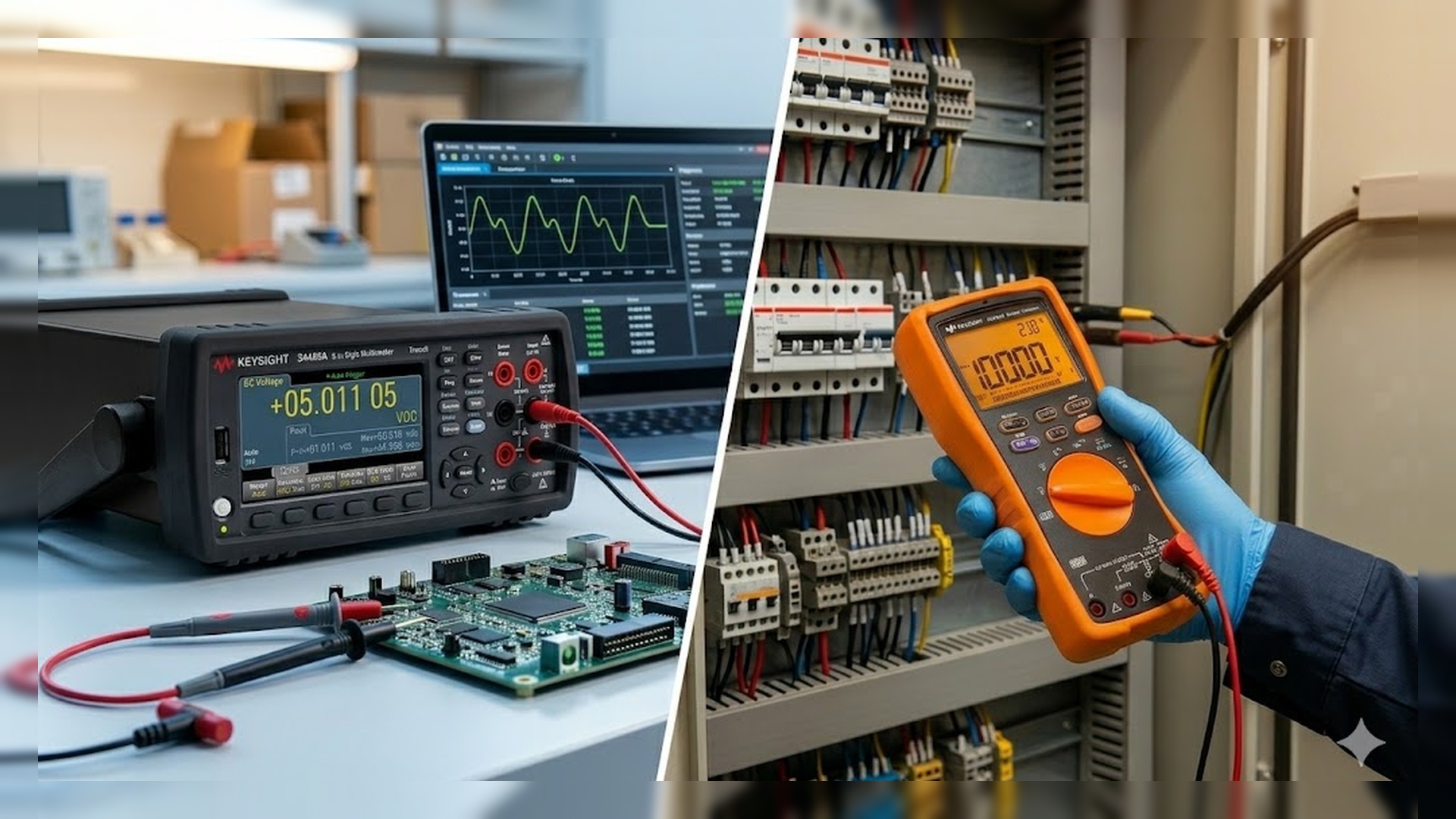
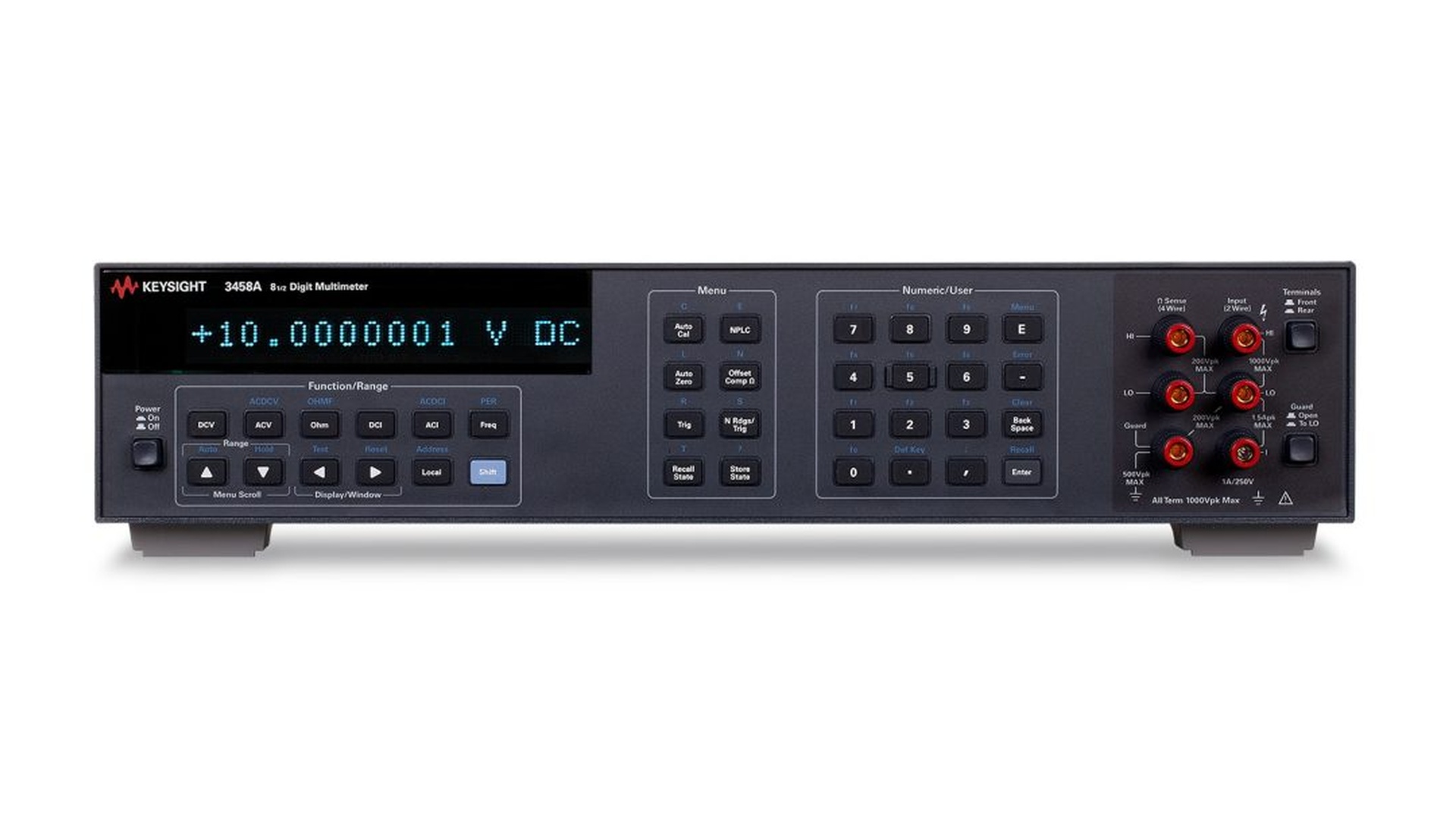
For example, an engineering student or service technician performing everyday electrical measurements may only require a reliable 5½-digit benchtop DMM for general-purpose bench work. An R&D engineer validating a new power supply or semiconductor design is more likely to require the higher accuracy, faster measurement speed and automation capabilities offered by 6½- or 7½-digit benchtop DMMs. At the highest level, calibration laboratories and advanced research facilities rely on a 8½-digit high-performance DMM, eg, Keysight’s 3458A is recognised worldwide for its exceptional accuracy and long-term measurement stability.
On the other hand, engineers performing maintenance, installation or troubleshooting in the field require a completely different set of capabilities. Rather than high measurement precision, they need portability, electrical safety, rugged construction and long battery life—areas where Keysight’s U-Series handheld digital multimeters are specifically designed to perform.
The first decision, therefore, is not which model to buy, but which type of digital multimeter best suits your application.
The following sections compare benchtop and handheld digital multimeters across four engineering criteria that most influence instrument selection: measurement accuracy & resolution, measurement speed & throughput, safety rating and automation & connectivity capability.
Why Benchtop DMMs Excel in Lab and Production Environments
An R&D engineer characterising a new power supply design needs to know whether a voltage deviation is real or an artefact of the instrument. A production test technician running high-volume board verification needs readings fast enough that the instrument is not the throughput bottleneck.
Benchtop DMMs address both scenarios in ways handheld instruments typically cannot, not because handhelds are lower quality, but because they are built for a different set of trade-offs.
Measurement Accuracy & Resolution
For precision measurements, accuracy is often the deciding factor. Benchtop DMMs typically offer significantly higher measurement accuracy, greater resolution and lower measurement uncertainty than handheld instruments.
They also support four-wire (Kelvin) resistance measurements, eliminating the effect of test lead resistance. This is essential when measuring low-value resistances such as shunts, contact resistance and PCB traces, where even a few milliohms of lead resistance can distort the result.
For engineers performing product validation, calibration or component characterisation, this level of measurement confidence is difficult to achieve with a handheld DMM.
Measurement Speed & Throughput
Measurement speed becomes increasingly important in manufacturing and automated testing.
While handheld DMMs are designed for manual troubleshooting and periodic measurements, benchtop instruments can acquire thousands of readings every second.
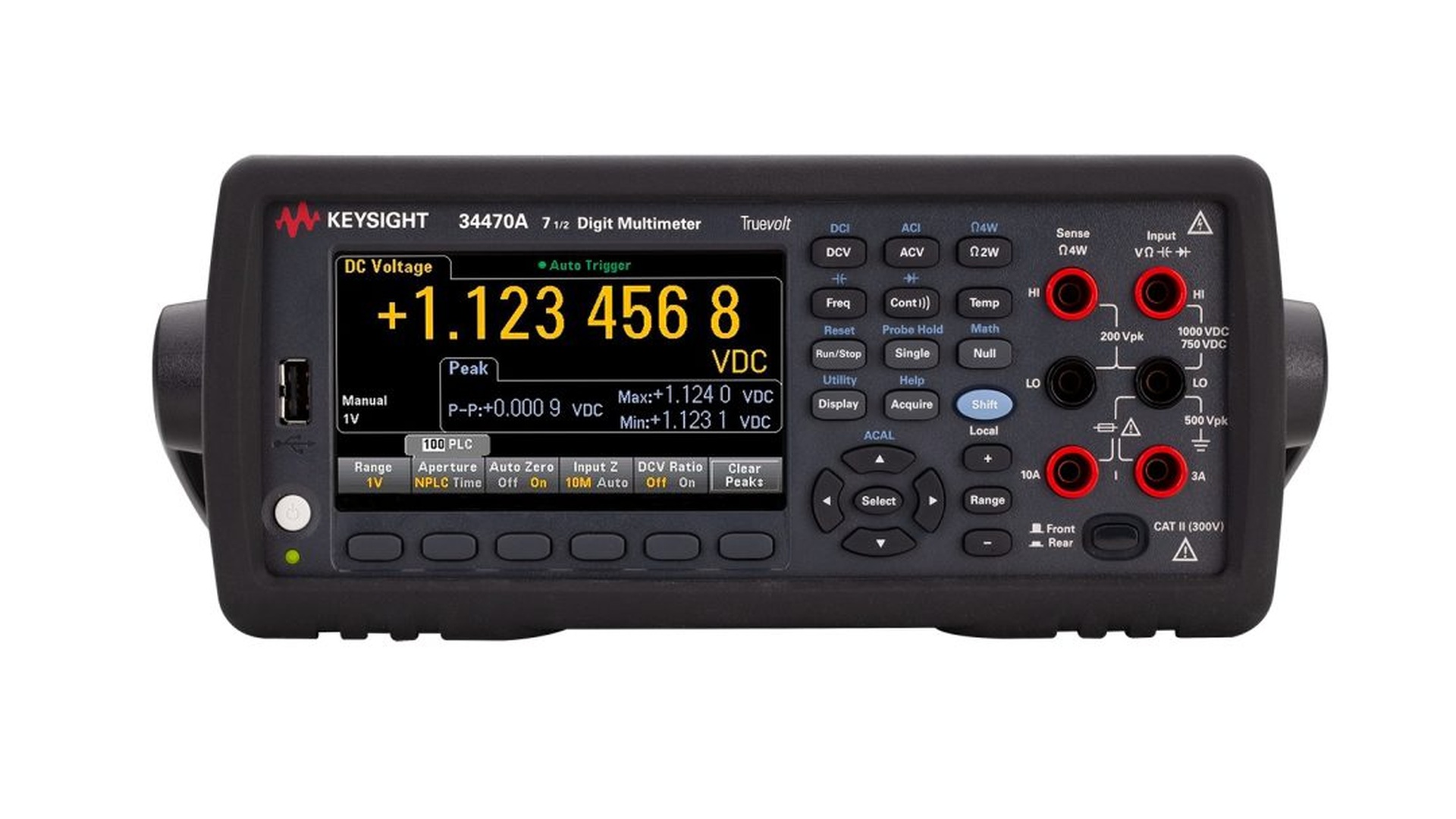
For example, the Keysight Truevolt 34470A delivers up to 50,000 readings per second while maintaining high DC voltage accuracy. Faster acquisition reduces overall test time and improves production throughput, making benchtop DMMs ideal for automated test systems and design verification.
Automation & Connectivity
Modern laboratories increasingly rely on automated measurement systems.
Benchtop DMMs integrate easily into these environments through interfaces such as USB, LAN (LXI), GPIB and RS-232, while supporting standard SCPI commands for remote control and programming.
Many models also provide graphical display modes including trend charts, histograms and bar graphs, allowing engineers to visualise signal stability, drift and statistical variations without exporting data to external software.
Calibration Confidence
Measurement confidence extends beyond published accuracy specifications.
Many Keysight benchtop DMM specifications are derived and guaranteed in accordance with ISO/IEC 17025 calibration practices, providing traceability for laboratories operating under quality management systems and formal calibration requirements.
When a Handheld DMM Is the Right Choice
For maintenance engineers, electricians and field service technicians, portability is often more important than high precision.
A handheld DMM is designed for measurements performed directly on installed equipment, electrical panels and industrial machinery where mobility, battery operation and safety certification are essential.
Safety Rating
Safety should be the primary consideration when selecting a handheld DMM.
Measurement categories defined by IEC 61010 indicate the transient overvoltage environments an instrument is designed to withstand:
- CAT II – Appliances, portable equipment and branch circuits
- CAT III – Distribution panels, industrial equipment and fixed installations
- CAT IV – Utility service entrances and primary supply points
Selecting the correct CAT rating is essential for protecting both the user and the instrument when working on live electrical systems.
Ruggedness for Field Use
Field environments demand instruments that withstand dust, moisture and accidental drops.
Many professional handheld DMMs offer IP-rated protection and robust mechanical construction.
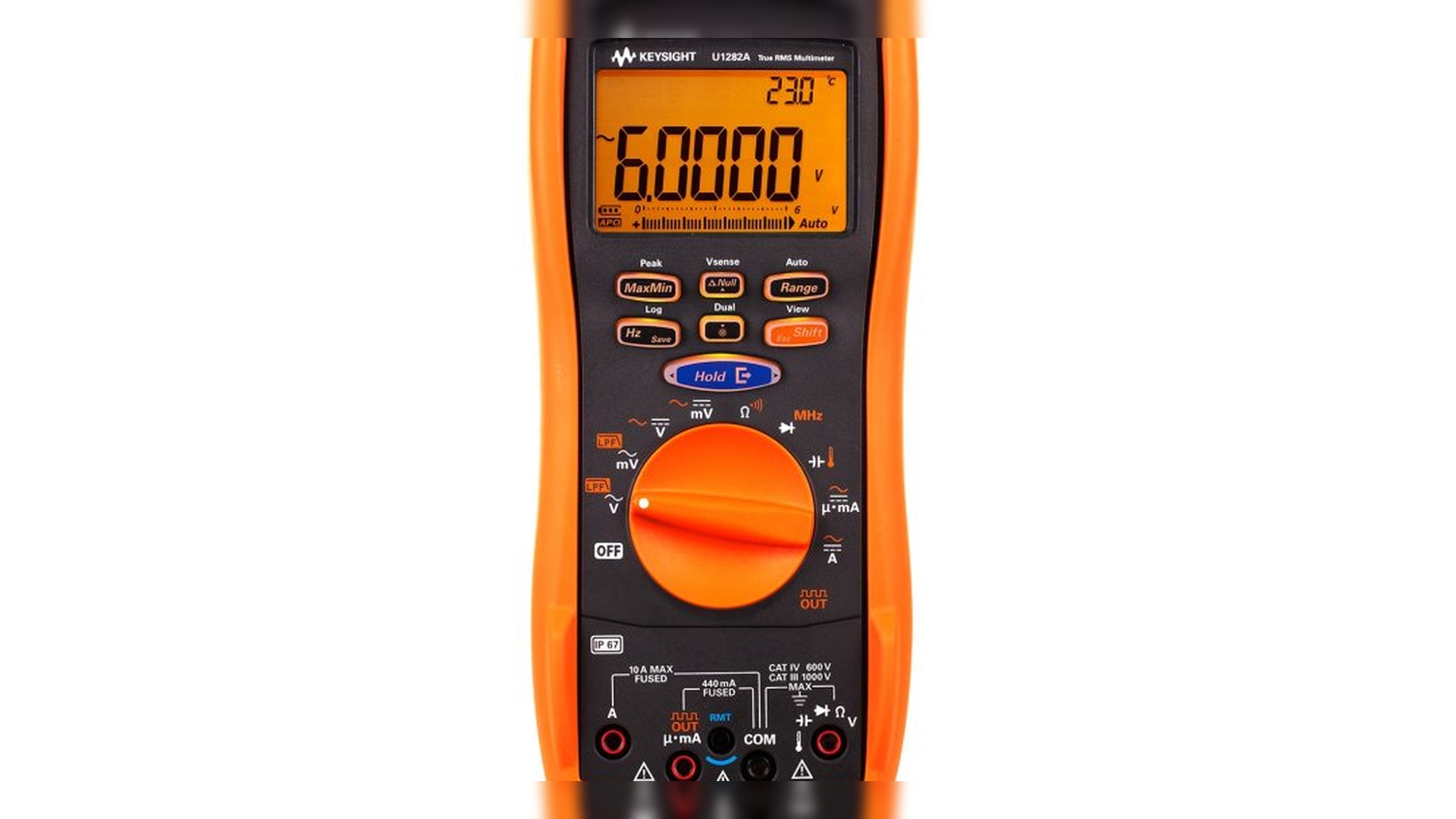
For example, the Keysight U1282A features:
- IP67 dust and water resistance
- CAT IV 600 V / CAT III 1000 V safety rating
- 60,000-count True RMS measurements
- Up to 800 hours of battery life
These characteristics make handheld DMMs well suited for electrical maintenance, commissioning, HVAC servicing and industrial troubleshooting.
FAQs
The right choice depends on where and how the instrument will be used.
Choose a benchtop DMM if your work requires high measurement accuracy, fast reading speeds, automated testing or long-term data logging. Benchtop models are ideal for R&D laboratories, production testing, calibration and Automated Test Equipment (ATE).
Choose a handheld DMM if portability, battery operation and electrical safety are the priority. They are better suited for field maintenance, equipment installation, troubleshooting and electrical inspections.
Four specifications have the greatest impact on performance:
- Measurement Accuracy & Resolution – Determines how closely the reading matches the true value and the smallest change that can be detected.
- Measurement Speed & Throughput – Important for production testing and automated measurements where faster readings improve efficiency.
- Safety Rating – CAT II, CAT III or CAT IV ratings indicate the electrical environments where the meter can be used safely.
- Automation & Connectivity – USB, LAN, GPIB and SCPI support enable remote control and integration into automated test systems.
Comparing these four areas will help narrow down the most suitable DMM for your application.
Benchtop DMMs generally provide significantly higher accuracy and resolution than handheld models because they are designed for laboratory and production environments.
For example, the Keysight Truevolt 34461A offers 35 ppm one-year DC voltage accuracy, while the 34470A improves this to 16 ppm. At the highest level, the Keysight 3458A delivers 8 ppm one-year DC voltage accuracy with 8½-digit resolution.
Handheld DMMs are optimised for portability, safety and reliable field measurements rather than high precision.
Every measurement contributes to the overall test cycle time.
In automated manufacturing environments, a faster DMM reduces test time, increases throughput and improves equipment utilisation. Benchtop DMMs can acquire thousands of readings per second and synchronise with other test instruments, making them suitable for high-volume production and design validation.
For occasional troubleshooting or maintenance work, the slower measurement rate of a handheld DMM is generally sufficient.
Most handheld DMMs perform two-wire resistance measurements, where test lead resistance becomes part of the measurement.
Four-wire (Kelvin) resistance measurement is a standard feature on many benchtop DMMs, including the Keysight Truevolt Series. By separating the current and voltage paths, it eliminates lead resistance errors and provides much more accurate measurements of low-value resistances such as shunts, contacts and PCB traces.
Find the Right Keysight Digital Multimeter with Tekmark
Whether you’re equipping an R&D laboratory, setting up an automated production test system or performing field maintenance, selecting the right digital multimeter starts with matching the instrument to your application.
Tekmark is the authorised Keysight distributor with strategic coverage across Southeast Asia, operating through direct offices in Malaysia, Singapore, and the Philippines. We offer the complete range of Keysight benchtop and handheld digital multimeters, backed by local application expertise and technical support. Contact our team to discuss your measurement requirements and receive a recommendation tailored to your application.
Related Articles