
What Is RF Testing? A Guide to Radio Frequency Measurement
When using your smartphone or trying to get a stable internet connection, have you ever wondered what makes these technologies work? Behind them are radio-frequency (RF) signals, which make wireless communication possible. But for wireless devices to perform well, those signals need to be measured and tested carefully. That is where RF testing comes in.
RF testing is used to measure and analyze radio frequency signals to see how well a device or system is performing. It helps assess signal quality, detect interference, improve reliability, and ensure wireless products work as expected in real-world environments. As wireless technologies continue to expand across industries, accurate RF measurement becomes even more important.
In this guide, we will break down the basics of RF testing, including what it is, where it is used, why it matters, and the instruments commonly used to carry out RF measurements.
What Is RF Testing?
RF testing refers to the process of measuring and analyzing radio frequency signals to understand how well a device, component, or system performs. In simple terms, it is used to evaluate wireless behavior, check signal quality, identify interference, and confirm that equipment is working as expected.
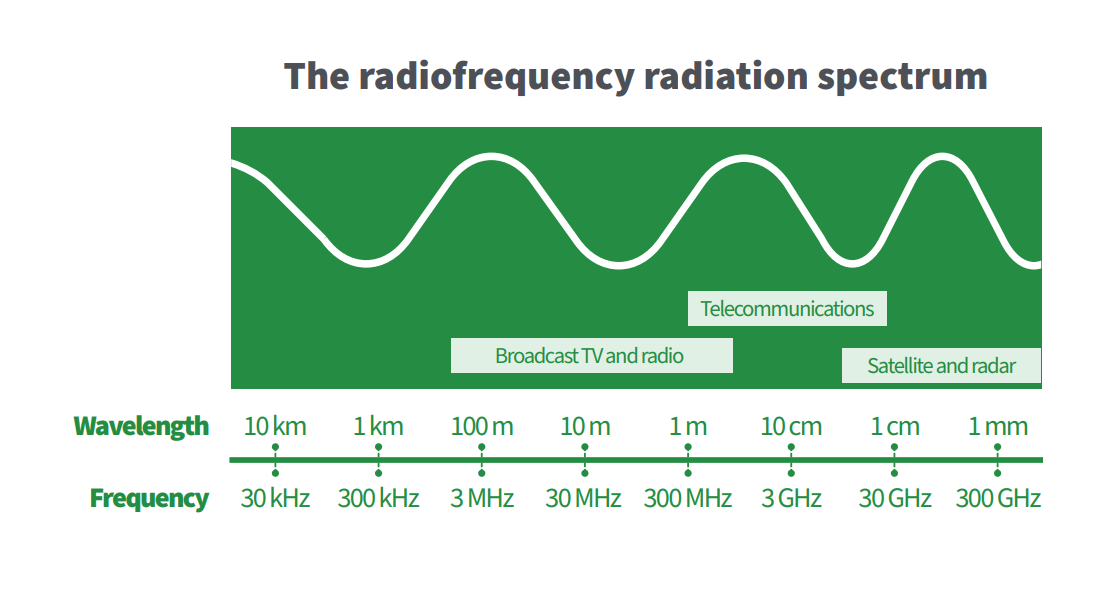
Radio frequency, or RF, is part of the electromagnetic spectrum used for wireless communication. It enables many of the technologies we use every day, including smartphones, Wi-Fi, broadcasting systems, satellite communications, and other connected devices, to send and receive information without physical cables.
Because wireless signals can be affected by interference, signal loss, and environmental conditions, RF testing plays an important role in ensuring performance and reliability. It helps engineers and technicians understand how signals behave under real-world conditions, identify problems, and determine whether a product can deliver stable, consistent operation.
Why Is RF Testing Important?
RF testing is more than just analyzing and evaluating signals. It plays an important role in maintaining signal quality, detecting interference, improving reliability, and supporting compliance.
1. Maintaining signal quality
RF testing helps verify whether signals are strong, clear, and stable enough for effective wireless communication. This is important for ensuring devices can transmit and receive data as expected.
2. Detecting interference
Wireless signals can be disrupted by unwanted noise, overlapping frequencies, or nearby electronic systems. RF testing helps identify these sources of interference before they affect performance.
3. Improving reliability
A device may work well in controlled conditions but perform differently in actual environments. RF testing helps confirm that products can operate consistently and reliably under varying real-world conditions.
4. Supporting compliance
Many wireless products must meet technical and regulatory requirements before they can be used or sold in certain markets. RF testing helps verify that devices meet the necessary standards for safe and proper operation.
5. Improving overall performance
By measuring and analyzing radio frequency signals, RF testing helps engineers and technicians identify issues early and make improvements before products are deployed in real-world environments.
Where Is RF Testing Used?
RF testing is used across many industries and applications where wireless communication, signal transmission, or radio frequency performance matters. Because RF signals are involved in so many everyday and specialized technologies, testing helps ensure these systems can operate reliably, consistently, and with minimal interference.
Some common areas where RF testing is used include:
- Wi-Fi devices and routers
RF testing helps evaluate signal strength, coverage, and overall wireless performance for internet connectivity.
- Smartphones and mobile devices
It is used to assess how well devices transmit and receive signals for calls, data, and wireless communication.
- Antennas
RF testing helps verify that antennas are transmitting and receiving signals effectively.
- Broadcasting systems
Radio and television broadcasting rely on RF testing to maintain signal clarity and consistent transmission quality.
- Radar systems
RF testing is important for checking signal performance, accuracy, and reliability in radar applications.
- Satellite systems
Satellite communications depend on RF testing to support stable signal transmission over long distances.
- Automotive wireless systems
Modern vehicles use wireless features such as GPS, Bluetooth, keyless entry, and sensors, all of which may involve RF testing.
- Medical devices
Certain medical equipment uses wireless communication and requires RF testing to support safe and reliable operation.
- IoT devices
Connected devices such as smart sensors, trackers, and home automation products rely on RF testing to ensure dependable connectivity.
What Does RF Testing Measure?
RF testing measures several aspects of a radio frequency signal to understand how well a device or system is performing. In simple terms, it helps show whether a signal is strong, stable, clear, and free from issues that could affect wireless communication.
Some of the main things RF testing measures include:
- Frequency
This refers to where a signal operates within the radio frequency spectrum. Measuring frequency helps confirm that a device is transmitting in the intended range.
- Signal power or strength
RF testing checks how strong a signal is. This is important because signals that are too weak may not perform reliably, while signals that are too strong can create interference or fail to meet requirements.
- Bandwidth
Bandwidth refers to the range of frequencies a signal occupies. Measuring bandwidth helps determine whether a signal is using the correct amount of spectrum and operating efficiently.
- Unwanted emissions or interference
RF testing can identify signals that appear outside the intended frequency range or interference from nearby devices and systems. These issues can affect performance and disrupt communication.
- Signal quality or distortion
A signal may be present, but that does not always mean it is clean or accurate. RF testing helps detect distortion or other signal quality issues that may reduce performance.
- Stability and consistency over time
RF signals need to remain reliable, not just work for a moment. Testing helps assess whether a signal stays stable and performs consistently under different conditions and over time.
Depending on the application, RF testing may also assess factors such as output power, receiver and transmitter performance, and signal sensitivity. By measuring these areas, RF testing gives engineers and technicians a clearer picture of how a wireless product performs and whether it is ready for real-world use.
What are the Common Tools Used in RF Testing?
RF testing relies on a range of instruments to measure, analyze, and troubleshoot radio frequency signals. The right tool depends on what needs to be tested, where the testing takes place, and how detailed the measurement needs to be.
1. Signal and spectrum analyzers
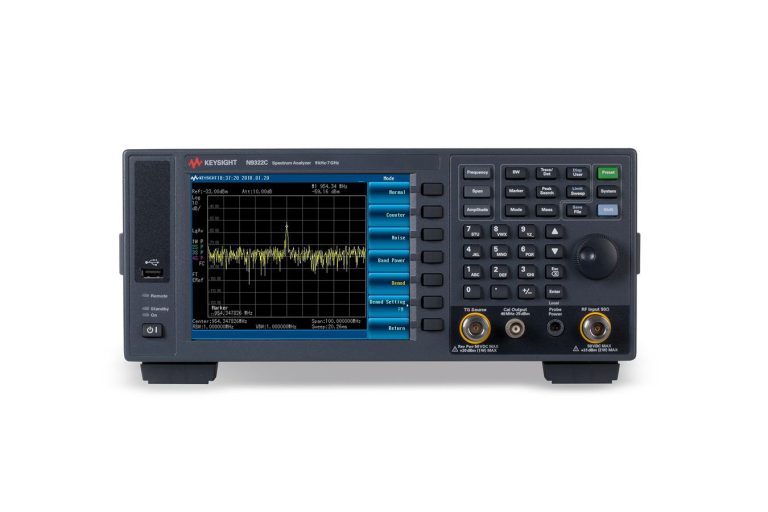
Signal and spectrum analyzers are among the most commonly used tools in RF testing. They help users observe how signal power is distributed across different frequencies, making them essential for understanding signal behavior in the frequency domain.
Some of the main benefits of using signal and spectrum analyzers include:
- measuring signal strength
- identifying interference
- detecting harmonics or spurious signals
- evaluating overall RF performance
- supporting wireless signal analysis in applications such as Wi-Fi, LTE, and 5G
Because they provide a frequency-domain view of a signal, they are often central to RF measurement and troubleshooting.
Looking for the right spectrum analyzer for your RF testing needs? Tekmark offers Keysight spectrum analyzers for different testing needs, from basic spectrum analyzers for general RF testing to X-Series signal analyzers for advanced lab work, modular PXI analyzers for automated setups, and FieldFox handheld analyzers for portable field use.
Explore the range with us to find the right fit for your application today!
2. Handheld analyzers
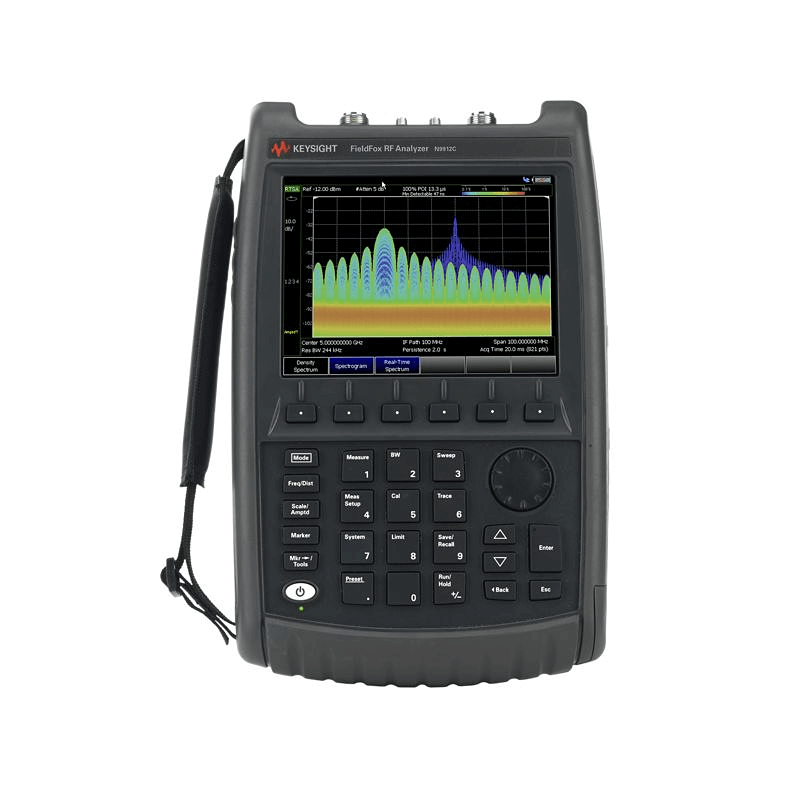
Handheld analyzers are compact, portable tools designed for use outside the lab. They are especially useful for field work, on-site maintenance, and troubleshooting in real-world environments where portability and mobility matter.
Some of the key benefits of handheld analyzers include:
- portable RF measurement in the field
- convenient on-site troubleshooting
- easier testing in outdoor or remote locations
- support for maintenance work outside lab environments
These instruments make it easier to carry out RF measurements in locations such as communication sites, industrial facilities, and outdoor installations.
Need a portable solution for RF measurements outside the lab? Tekmark offers Keysight FieldFox handheld analyzers in its handheld combination analyzer range for field testing, on-site maintenance, and troubleshooting. Contact us today to learn more!
3. Oscilloscopes
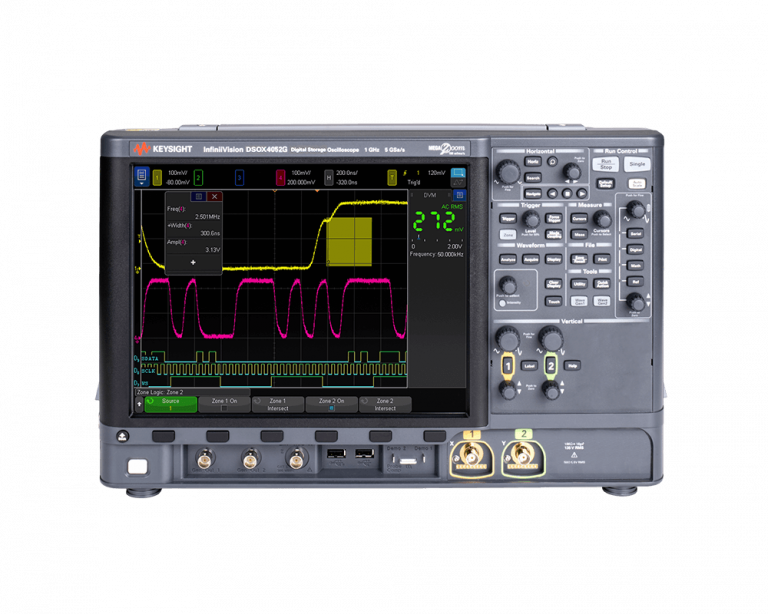
Oscilloscopes are used to observe waveform behavior over time. In RF testing, they support signal analysis by helping users examine waveform characteristics, signal integrity, and other time-domain behaviors that may affect overall system performance.
Some of the main benefits of oscilloscopes include:
- real-time signal visualization
- precise measurement of waveform characteristics
- analysis of signal integrity and time-domain behavior
- advanced triggering to detect rare or intermittent events
- support for troubleshooting and design verification
Want better visibility into waveform behavior during RF testing? Tekmark provides Keysight oscilloscopes including DSO (Digital Storage Oscilloscopes), MSO (Mixed-Signal Oscilloscopes), and handheld oscilloscopes, to support signal visualization, precise measurement, and advanced triggering. Contact us today to discuss the best option for your application.
4. Other Supporting Tools
Depending on the application, other instruments may also be used in RF testing. These include:
- Signal generators, which generate RF signals for testing device performance, receiver sensitivity, and system response
- Network analyzers, which are used to characterize RF components such as antennas, filters, amplifiers, and cables by measuring parameters such as impedance and S-parameters
- Power sensors and power meters, which provide accurate RF power measurements for signal validation, calibration, and precise power analysis
What are the Challenges of RF Testing?
Although RF testing is essential, it is not always straightforward. Wireless signals can be affected by surrounding interference, environmental conditions, and the limitations of the testing setup itself. As frequencies increase, issues such as power loss and signal degradation can also become more noticeable.
Some common RF testing challenges include:
- Interference from other signals, which can make it harder to isolate and evaluate performance
- Environmental conditions, such as physical surroundings or signal obstacles, that affect measurement results
- Choosing the right instrument, since different applications require different levels of capability
- Balancing portability and performance, especially when comparing field-ready tools with lab-grade instruments
- Maintaining signal integrity, particularly in more demanding or higher-frequency applications
These challenges are one reason why selecting the right RF testing tools and setup is so important.
Explore RF Testing Solutions for Your Application!
RF testing is essential for maintaining signal quality, detecting interference, improving reliability, and supporting compliance across wireless applications. Whether your work involves lab-based analysis or on-site troubleshooting, accurate RF testing starts with the right tools.
Tekmark offers a wide range of RF and test and measurement solutions, including Keysight instruments such as FieldFox handheld analyzers and spectrum analyzers, to help businesses and engineering teams find the right setup for their specific applications.
Why choose TekMark:
- Established in 1994 with over three decades of test and measurement experience
- Extensive industry network across Southeast Asia
- Authorized technology partner of Keysight Technologies
- In-house R&D engineers providing system integration solutions
- Offer value added services such as professional training, calibration services and technical insights.
- Dedicated technical support and customer service
Looking for the right RF testing solution for your application? Contact us today!
FAQs
RF performance can behave differently outside controlled lab environments due to obstacles, reflections, weather conditions, nearby signal sources, and varying electromagnetic environments.
Field testing helps engineers understand how a device performs under actual operating conditions where interference and signal propagation are less predictable.
Signal distortion in RF systems is often caused by non-linear components, impedance mismatches, or signal reflections within the RF path. These issues can degrade signal integrity, reduce power transfer efficiency, and impact overall system performance.
To troubleshoot distortion:
- Use a Keysight network analyzer to measure impedance across critical points in the RF chain
- Identify mismatched components or excessive reflections
- Optimize matching networks and verify return loss performance
- Re-test the system to confirm signal integrity improvements
Keysight network analyzers help engineers quickly identify mismatch-related issues and improve RF system performance with accurate impedance and S-parameter measurements.
RF interference from nearby devices can lead to unstable measurements, higher noise levels, and degraded wireless performance.
Common interference sources include:
- Wireless transmitters
- Switching power supplies
- Industrial equipment
- Other nearby RF systems
Ways to reduce RF interference:
- Use a Keysight spectrum analyzer to identify unwanted signals across the frequency range
- Improve RF shielding and grounding
- Separate sensitive RF circuits from noisy electronics
- Maintain proper cable routing and connector quality
- Adjust operating frequencies to reduce signal overlap
Keysight spectrum analyzers help engineers quickly identify interference sources and evaluate RF signal behavior in both lab and field environments.
Advanced RF testing methods help engineers identify performance issues that may not be visible through basic signal measurements, especially in high-frequency and complex wireless systems.
Some commonly used advanced RF testing techniques include:
- Phase noise analysis to evaluate oscillator and frequency stability
- Harmonic analysis to detect unwanted frequency components affecting signal quality
- Time-domain reflectometry (TDR) to locate faults, discontinuities, or impedance changes within transmission lines
To perform advanced RF measurements, engineers typically:
- Connect the DUT (device under test) to the appropriate RF instrument
- Configure measurement settings such as frequency range or analysis mode
- Analyze signal behavior, reflections, or harmonic content
- Optimize circuit design or component selection based on the results
Keysight spectrum analyzers and network analyzers help engineers perform detailed RF analysis efficiently while improving measurement accuracy and troubleshooting capabilities.
RF testing is essential for verifying compliance with standards such as:
- FCC
- CE/RED
- ETSI
- 3GPP
- MIL-STD
- CISPR
Typical compliance-related RF measurements include:
- Conducted and radiated emissions
- Spurious emissions
- Occupied bandwidth
- Transmit power
- Receiver sensitivity
- EMC/EMI performance
Pre-compliance testing during development helps reduce certification risk, shorten validation cycles, and improve first-pass success rates.
Related Articles